
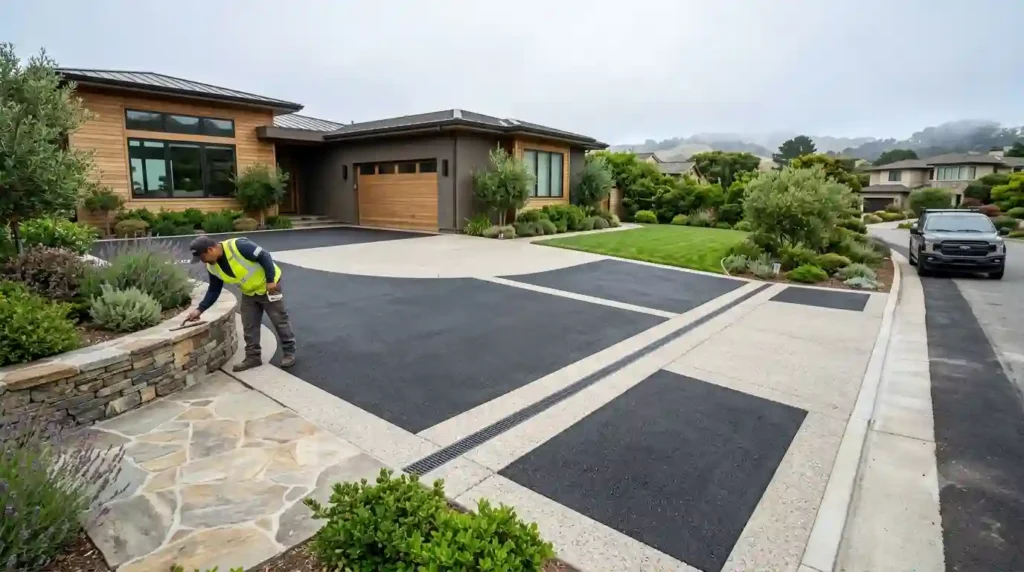
Here in the Bay Area, your driveway faces a tougher test than almost anywhere else in the country. We’ve got coastal fog rolling into Richmond, scorching inland summers baking Antioch and Brentwood, and expansive clay soil that swells and shrinks with every wet winter and dry summer. That ground movement, called clay soil shifting, is the silent enemy of every paved surface in our region. So when you’re deciding between asphalt vs concrete paving, you’re not just picking a look. You’re choosing a material that has to survive our unique microclimates and the restless earth beneath it.
The good news? Both asphalt and concrete can perform beautifully when they’re installed correctly. The trick is matching the right material to your property, your budget, and your goals. Let’s break it all down so you can make a confident, well-informed choice.
Quick Comparison: Asphalt vs Concrete at a Glance
Before we dig into the details, here’s a side-by-side look at how these two heavyweights stack up for a typical Bay Area driveway.
| Factor | Asphalt | Concrete |
|---|---|---|
| Upfront Cost | Lower (roughly $7–$13 per sq. ft.) | Higher (roughly $10–$18+ per sq. ft.) |
| Lifespan | 15–20 years with maintenance | 25–40 years with proper care |
| Maintenance | Sealcoating every 2–4 years | Occasional sealing, minimal upkeep |
| Climate Suitability | Flexes with ground movement; softens in extreme heat | Rigid and stable; can crack on shifting clay |
| Curing Time | Drivable in 2–3 days | Drivable in 5–7 days, full cure 28 days |
Notice there’s no single “winner” in that table? That’s the whole point. Your perfect material depends on which of these factors matters most to you. Let’s explore each option in depth.
The Case for Asphalt: Flexible, Fast, and Earthquake-Friendly
Asphalt has earned its reputation as the budget-friendly workhorse of driveways, but there’s real engineering behind its popularity here in California.
Built-In Flexibility for Shifting Soils
Asphalt is a flexible pavement. Instead of fighting against ground movement, it bends with it. When our expansive clay soils heave during the rainy season or contract during a dry Concord summer, asphalt’s pliable nature lets it absorb minor shifts without catastrophic cracking. That tensile flexibility is a genuine advantage in neighborhoods built on unstable subgrades.
Seismic Resilience in Earthquake Country
We live on fault lines, plain and simple. Asphalt’s ability to flex under stress makes it surprisingly resilient when the ground moves. While no surface is earthquake-proof, asphalt tends to develop manageable surface cracks rather than the deep structural fractures rigid materials can suffer. For many homeowners, that peace of mind matters.
Quick Curing Means Less Downtime
One of asphalt’s biggest perks? You can typically drive on a new asphalt driveway in just 2 to 3 days. Compare that to concrete’s week-long wait, and you can see why busy households and commercial property managers love the fast turnaround. If you need a parking area back in service quickly, asphalt paving Bay Area projects are hard to beat.
The Maintenance Trade-Off: Sealcoating
Here’s the honest part. Asphalt asks for more attention over its lifetime. To protect against UV damage, water intrusion, and our temperature swings, you’ll want to sealcoat every 2 to 4 years. Skip this maintenance and sealing routine, and asphalt’s lifespan drops fast. Stay on top of it, and a well-laid surface will serve you faithfully for 15 to 20 years. Think of sealcoating like sunscreen for your driveway, a small, regular investment that pays off big.
The Case for Concrete: Strength, Style, and Staying Power
If asphalt is the flexible workhorse, concrete is the rigid powerhouse. It costs more upfront, but it brings serious long-term value to the table.
Superior Load-Bearing Capacity and Structural Integrity
Concrete is the champion of load-bearing capacity. Its rigid structure handles heavy vehicles, RVs, and constant traffic without rutting or deforming. For commercial property managers in Oakland or anyone parking heavier loads, that structural integrity is a game-changer. A properly poured slab distributes weight evenly, resisting the depressions that can plague softer surfaces. Explore professional concrete driveway installation to see how the right base and reinforcement make all the difference.
Customization That Turns Heads
This is where concrete really shines. Plain gray is just the beginning! With stamped patterns and decorative staining, your driveway can mimic natural stone, brick, or tile at a fraction of the cost. Want something cohesive with your landscaping? Stamped and stained concrete lets you design a surface that’s genuinely yours. And if you love that high-end look, you might also consider paver alternatives for an even more customizable finish.
A Smart Boost to Property Value
A beautiful, durable concrete driveway is a visible upgrade that buyers notice immediately. With a lifespan of 25 to 40 years and minimal maintenance, concrete delivers a strong return on investment. When you weigh the higher upfront investment against decades of low-upkeep performance, it becomes a genuinely cost-effective long-term solution, especially if you plan to stay put for years or sell down the road.
The Concrete Caveat: Thermal Expansion and Cracking
Concrete isn’t flawless. Because it’s rigid, it doesn’t tolerate ground movement the way asphalt does. On expansive clay without proper preparation, concrete can crack. It’s also subject to thermal expansion, expanding and contracting with temperature changes, which is exactly why control joints and a well-engineered base are non-negotiable. This is the difference between a slab that lasts 40 years and one that fails in five. Installation quality is everything.
The Bay Area Factor: Why Local Conditions Change Everything
A driveway that thrives in Phoenix might fail in Pittsburg. Our region has its own rulebook, and ignoring it is the fastest way to waste your money.
Shifting Soils Demand Expert Site Prep
That expansive clay we mentioned? It’s the number one reason Bay Area driveways fail prematurely. Whether you choose asphalt or concrete, the subgrade preparation, compaction, and grading determine your surface’s true lifespan and durability. Proper site work that accounts for drainage and soil behavior is the foundation of every successful project. Cut corners here, and even the best material won’t save you.
Microclimates Matter More Than You Think
The Bay Area packs wildly different climates into a small area. Foggy, damp conditions near Richmond favor materials and sealants that resist moisture, while the intense inland heat around Antioch and Brentwood can soften asphalt and stress concrete joints. A material choice that’s perfect in one city may be a poor fit just twenty minutes away. Local knowledge isn’t optional, it’s essential.
City Building Codes and Permits
Each municipality, from Concord to Oakland, has its own permitting requirements, drainage standards, and setback rules. A driveway replacement that violates local code can cost you fines and rework. Working with a licensed paving contractor in Bay Area communities trust ensures your project meets every regulation from day one.
Why Choose Golden Space Construction
When the ground beneath your driveway is constantly moving, you want a team that treats your project like the engineering challenge it really is. At Golden Space Construction, we don’t just lay surfaces, we build foundations designed to outlast our region’s toughest conditions.
Here’s what sets us apart:
- Local engineering expertise: We understand Bay Area soils, microclimates, and city codes inside and out, so your driveway is engineered for where you actually live.
- Flawless installation and grading: Our crews obsess over proper site preparation, compaction, and drainage, the unglamorous details that determine whether your investment lasts decades or fails early.
- Full-service hardscaping: Driveways are just the start. Browse our complete range of paving and hardscape services to see how we can transform your entire outdoor space.
Whether you lean toward flexible asphalt or rugged concrete, we’ll guide you to the choice that fits your property, your budget, and your long-term goals. No pressure, just honest, expert advice.
Frequently Asked Questions
Can you pour concrete over old asphalt?
It’s possible, but it’s rarely a good idea. Asphalt flexes and concrete is rigid, so the differing behaviors often lead to cracking. The old asphalt can also trap moisture and shift, undermining your new slab. For a long-lasting result, professionals almost always recommend removing the old surface and preparing a proper base first.
Which lasts longer in the Bay Area, asphalt or concrete?
Concrete generally lasts longer, typically 25 to 40 years versus 15 to 20 years for asphalt. However, that’s only true with correct installation on our expansive clay soils. On poorly prepared ground, rigid concrete can crack early while flexible asphalt may hold up better. The real deciding factor is the quality of the site preparation and grading.
Is asphalt or concrete cheaper for a driveway?
Asphalt has the lower upfront cost, usually $7 to $13 per square foot compared to $10 to $18+ for concrete. But concrete’s longer lifespan and lower maintenance can make it more economical over time. Your best move is comparing total cost of ownership, not just the initial driveway replacement cost.
How long before I can drive on a new driveway?
Asphalt is typically ready in 2 to 3 days. Concrete needs about 5 to 7 days before light use and a full 28 days to reach maximum strength. Always follow your contractor’s specific guidance, since curing time depends on weather and material mix.
Ready to Pave Smarter? Let’s Talk
The right driveway starts with the right partner who knows our local ground, climate, and codes. Don’t gamble your investment on guesswork. Let our team evaluate your property’s soil, drainage, and goals to recommend the perfect material for your home or business.
Contact Golden Space Construction today for a custom site evaluation and a no-obligation quote. Let’s build a driveway that stands strong for decades to come!