
Let’s be honest, your driveway rarely gets a second thought until something goes wrong! Maybe you trip over a raised edge, or you notice a puddle that never seems to dry. By then, small problems have often grown into expensive ones.
Here’s the thing: a worn driveway does more than look tired. It creates safety hazards, drags down your home’s curb appeal, and quietly chips away at your property value. Worse, those tiny cracks you keep ignoring? They tend to multiply fast.
The good news is that catching the warning signs early saves you serious money. When you act before damage spreads, you avoid bigger repair bills and protect your investment for years.
So how do you know when it’s time? In this guide, we’ll walk through every sign that your driveway needs attention, explain why driveways wear out, and help you decide between a quick repair and a full repave. Let’s dig in!
Why Driveways Wear Out Over Time
Even the best-built driveway won’t last forever. Knowing what causes the damage helps you spot trouble early and plan smart.
Weather. The California climate brings intense sun, occasional heavy rain, and warm-cold swings. Over time, UV rays dry out asphalt and moisture seeps into concrete, both of which speed up surface deterioration.
Heavy vehicles. Delivery trucks, RVs, and daily parking add up. Constant weight stresses the surface and the base beneath it, leading to cracks and sinking.
Poor drainage. Water is your driveway’s biggest enemy. When drainage fails, water pools, undermines the base, and washes away support.
Tree roots. Roots grow slowly but powerfully. They push up from below, lifting and cracking even thick concrete.
Soil movement. California’s expansive clay soils shift as they absorb and release moisture. That movement strains the slab and creates uneven surfaces.
Poor installation. A rushed base or skipped grading sets a driveway up to fail early. This is why proper residential construction matters from day one.
Aging materials. Finally, every material has a lifespan. As concrete and asphalt age, they naturally lose strength and flexibility.
Suggested image placement: Close-up of a large diagonal crack running across a concrete driveway.
ALT text: Wide structural crack across a concrete driveway signaling the need for replacement
Top Signs Your Driveway Needs Repaving
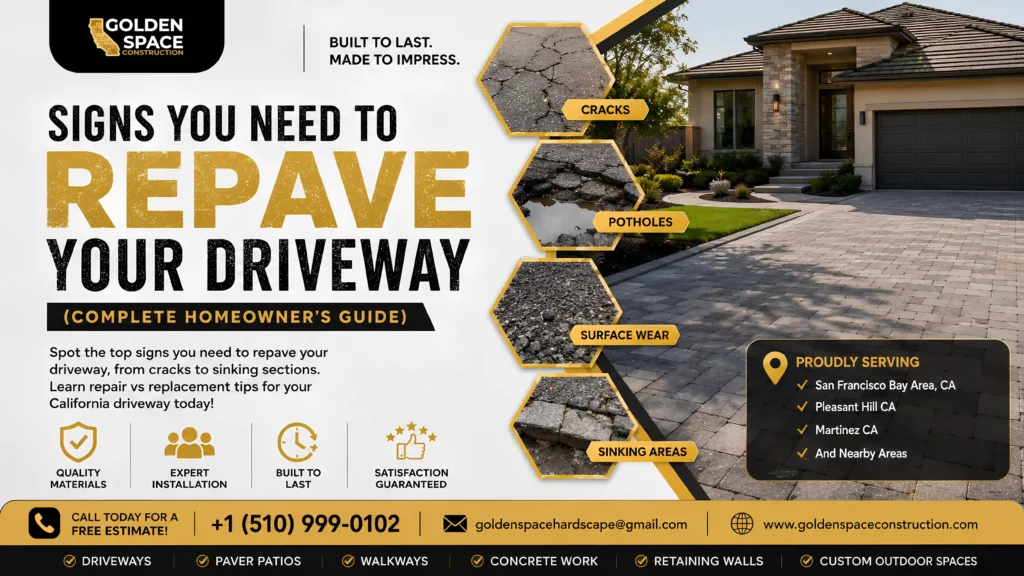
Ready to play detective? Walk outside and look closely. Here are the 14 signs that tell you your driveway needs help.
1. Large Cracks
Wide cracks, especially ones thicker than a quarter-inch, are a red flag. They often signal trouble with the foundation or base below the surface.
These usually form from soil movement, heavy loads, or water washing out the base. Left alone, they invite more water, expand fast, and lead to structural damage.
For a few isolated large cracks, professional crack repair may work. But widespread cracking usually points to a full repave being the smarter investment.
2. Multiple Small Cracks
One small crack is no big deal. A whole web of them? That’s a different story.
Often called “alligator cracking” on asphalt, this pattern shows the surface is breaking down across the board. It happens as materials age and the base weakens.
When small cracks spread everywhere, patching becomes a losing game. At this point, concrete driveway replacement gives you a fresh, durable start.
3. Potholes
Potholes aren’t just ugly, they’re hard on your tires and your suspension! They form when water gets under the surface, erodes the base, and the top layer finally collapses.
A single pothole can sometimes be filled. However, recurring potholes mean the base has failed underneath, and that calls for repaving rather than another quick fix.
4. Uneven Surface
Does your driveway have humps, dips, or ridges? An uneven driveway usually points to soil movement, tree roots, or a poorly compacted base.
Beyond looking rough, uneven surfaces create real tripping and drainage hazards. If the unevenness is widespread, resurfacing or full replacement restores both safety and smoothness.
5. Standing Water
Notice puddles that linger long after the rain stops? Standing water means your driveway isn’t draining the way it should.
This happens when the surface settles or the original grading was off. Pooled water seeps into cracks, freezes during cold snaps, and accelerates damage. Correcting the slope during a repave solves it for good.
6. Drainage Problems
Closely related, broader drainage problems can send water toward your home’s foundation, garage, or landscaping. That’s a costly issue waiting to happen.
Proper water drainage is non-negotiable for a healthy driveway. A professional can re-grade the surface and even pair it with a retaining wall on sloped lots to keep water moving the right way.
7. Surface Crumbling
Run your hand over the surface, does it feel rough, flaky, or gravelly? Surface deterioration like this means the top layer is breaking apart.
On concrete, this often shows as “spalling,” where the finish chips and peels. It’s usually caused by weather, age, or a poor original mix. Once crumbling spreads, repaving is the reliable answer.
8. Fading and Weather Damage
Sun-bleached asphalt or chalky, discolored concrete signals years of wear. While fading alone isn’t structural, it’s a clue that the protective surface is gone.
Without that protection, water and UV rays do more damage faster. Sometimes resurfacing with fresh decorative concrete restores both looks and protection beautifully.
9. Loose or Missing Pavers
Got a paver driveway? Loose, shifting, or missing pavers usually mean the base or joint sand has eroded.
A few wobbly pavers are easy to reset. But if large sections have shifted, the base needs attention. Skilled paver installation specialists can rebuild the foundation and relay the surface properly.
10. Sinking Sections
When part of your driveway dips lower than the rest, the base beneath has washed out or compacted unevenly. This is one of the clearest signs of base failure.
Sinking sections trap water and worsen quickly. Because the problem lives underground, surface patches won’t last. A proper repave with a rebuilt base is the right call here.
11. Tree Root Damage
Those beautiful shade trees can wreak havoc below ground! Roots grow under the slab, then lift and crack it as they expand.
Once roots have caused buckling, simply patching the top does nothing. You’ll need to address the roots and repave the affected area to restore a level, safe surface.
12. Oil Stains That Have Penetrated
A surface oil spot wipes away easily. But stains that have soaked deep into the material are another matter.
Penetrated oil weakens asphalt and leaves permanent marks on concrete. When stains run deep across a tired surface, repaving gives you a clean slate that’s far easier to maintain.
13. Frequent Repairs
Are you patching the same driveway again and again? That’s a strong hint the repairs are just buying time.
When you add up the cost of constant fixes, a full repave often makes better financial sense. One quality investment beats an endless cycle of band-aid solutions.
14. Driveway Is Over 20–30 Years Old
Age matters! Most asphalt driveways last 15 to 25 years, while concrete can reach 30 or more with good care.
If your driveway is pushing past these milestones, even minor damage signals the end of its useful life. A modern repave boosts curb appeal, safety, and your overall property value.
Repair vs Repaving: Which One Do You Need?
This is the big question every homeowner faces. The right answer depends on how much damage you’re dealing with and what’s happening below the surface.
When repairs are enough. Minor, isolated cracks, a single pothole, or small surface stains usually call for simple repairs. If the base is solid and damage covers less than 25% of the surface, targeted fixes work well.
When resurfacing works. Driveway resurfacing adds a fresh layer over a structurally sound base. It’s ideal when the surface looks worn but the foundation underneath is still strong. You get a like-new look for less than full replacement.
When complete replacement is smarter. Widespread cracking, sinking sections, drainage failure, or a base that’s given out all point to full driveway replacement. When the foundation fails, only a rebuild delivers lasting results.
Here’s a quick comparison to guide your decision:
| Factor | Repair | Resurfacing | Full Replacement |
|---|---|---|---|
| Best for | Small cracks, single potholes | Worn surface, solid base | Failed base, widespread damage |
| Relative cost | Lowest | Moderate | Highest |
| Lifespan added | 1–5 years | 8–15 years | 25+ years |
| Fixes base issues | No | No | Yes |
| Improves curb appeal | Minimal | Moderate | Significant |
| Boosts property value | Slight | Moderate | High |
Not sure which category your driveway falls into? An honest, transparent assessment from a trusted hardscape professional clears it up quickly.
Benefits of Repaving Your Driveway
Repaving is a real investment, so what do you actually get for it? Quite a lot, as it turns out!
Better curb appeal. A fresh driveway instantly transforms how your whole property looks. It’s one of the first things visitors and buyers notice.
Increased property value. Quality hardscape signals a well-cared-for home. That translates to stronger resale appeal and a healthier property value.
Improved safety. Say goodbye to trip hazards, potholes, and slick puddles. A smooth, level surface keeps your family and guests safe.
Better drainage. A proper repave corrects grading so water flows away from your home, not toward it.
Longer lifespan. A new driveway with a solid base gives you decades of dependable service.
Lower maintenance. Modern materials and clean installation mean fewer repairs and less upkeep year after year.
Modern appearance. Finally, you get to choose fresh colors, patterns, and finishes that match your style and update your home’s look.
Suggested image placement: Side-by-side display of concrete, interlocking pavers, stamped concrete, and asphalt driveway samples.
ALT text: Comparison of concrete, paver, stamped concrete, and asphalt driveway material options
Best Driveway Materials Compared
Choosing the right material is just as important as the installation itself. Here’s how the top options stack up for your home.
Concrete. A reliable, popular choice that balances cost and durability.
- Cost: Moderate
- Maintenance: Low; occasional sealing
- Durability: 30+ years with proper care
- Appearance: Clean and classic
Interlocking Pavers. These individual units lock together for strength and easy repairs.
- Cost: Higher upfront
- Maintenance: Refill joint sand, reset as needed
- Durability: 30+ years; simple to repair
- Appearance: Elegant, customizable patterns
Stamped Concrete. Get the look of stone or brick at a friendlier price.
- Cost: Moderate to high
- Maintenance: Reseal every 2–3 years
- Durability: Long-lasting with sealing
- Appearance: High-end, decorative
Decorative Concrete. Polished, colored, or aggregate finishes add real personality.
- Cost: Moderate to high
- Maintenance: Periodic sealing
- Durability: Excellent
- Appearance: Modern and unique
Asphalt. Budget-friendly and quick to install.
- Cost: Lowest
- Maintenance: Sealcoating every 2–3 years
- Durability: 15–25 years
- Appearance: Smooth, traditional black finish
Still weighing asphalt vs concrete driveway options? Concrete generally lasts longer and offers more design flexibility, while asphalt wins on upfront cost. Browse our project gallery to see these materials in real California homes.
How to Extend the Life of Your Driveway
Once you’ve invested in a great driveway, smart maintenance keeps it looking new for years. These simple habits make a huge difference!
Cleaning. Sweep away debris regularly and rinse off dirt. Clean spills, especially oil, before they soak in and stain.
Sealing. Sealcoating asphalt and sealing concrete protect against water, UV rays, and stains. Reapply every couple of years for best results.
Drainage. Keep water moving away from the surface. Clear gutters and check that the slope still directs runoff properly.
Weed prevention. On paver driveways, refill joint sand to block weeds and keep units locked tight.
Avoid heavy loads. When possible, keep oversized trucks and heavy equipment off the surface to reduce stress.
Regular inspections. Walk your driveway a few times a year. Catching small cracks early lets you handle simple driveway repair before it grows into a big project.
A little attention goes a long way toward protecting your driveway lifespan and your wallet.
Why Professional Installation Matters
Tempted to save money with a DIY job or the cheapest bid around? When it comes to driveways, experience truly pays off. Here’s what a skilled paving contractor brings to the table.
Proper grading. Pros set the exact slope needed to direct water away from your home and prevent pooling.
Drainage. Beyond grading, experienced crews design complete drainage solutions that protect your foundation for the long haul.
Base preparation. That hidden, compacted base is everything. A well-built foundation stops the cracking, sinking, and shifting that doom rushed jobs.
Quality materials. Reputable contractors use proven materials suited to the California climate, not bargain products that fail early.
Long-term durability. Done right the first time, your driveway delivers decades of service with minimal fuss.
Warranty. A trustworthy concrete contractor backs the work, giving you real peace of mind and protection for your investment.
With a proven track record across communities like Concord, Oakland, Lafayette, and Danville, local professionals understand exactly what your driveway needs. They also offer transparent estimates and clear timelines, so you always know where your project stands. For larger upgrades, you can even pair the work with a full outdoor improvement plan.
Frequently Asked Questions
How often should a driveway be repaved?
Most asphalt driveways need repaving every 15 to 25 years, while concrete driveways can last 30 years or more with proper care. Climate, traffic, and maintenance all influence the exact timeline, so regular inspections help you plan ahead.
Can cracked concrete be repaired?
Yes, small isolated cracks can often be repaired with professional crack repair. However, widespread or deep cracks usually signal base problems, which means replacement is the longer-lasting solution.
How much does driveway replacement cost?
Costs vary based on material, size, and site conditions. Asphalt tends to be the most affordable, while concrete and pavers cost more upfront but last longer. A detailed, transparent estimate gives you the clearest picture for your specific project.
Is resurfacing cheaper than replacement?
Yes, resurfacing typically costs less than a full replacement because it adds a new layer over your existing base. It only works, though, when the base underneath is still structurally sound.
What causes driveway cracks?
Common culprits include soil movement, poor drainage, tree roots, heavy vehicles, and aging materials. Improper installation and a weak base also lead to early cracking.
Are pavers better than concrete?
Both are excellent! Pavers offer easy individual repairs and customizable designs, while concrete provides a seamless, budget-conscious surface. The best choice depends on your style, budget, and maintenance preferences.
How long does driveway installation take?
Most residential driveway projects take a few days, depending on size, material, and site prep. Concrete also needs curing time, usually about a week, before full use.
Will a new driveway increase home value?
Absolutely. A fresh, well-built driveway boosts curb appeal and signals a well-maintained home, which supports a stronger property value and faster resale.
How do I know if repairs are enough?
If damage is minor, isolated, and the base is solid, repairs usually suffice. When you see widespread cracking, sinking, or drainage failure, repaving becomes the smarter investment.
Which driveway material lasts the longest?
Concrete and quality interlocking pavers typically last the longest, often 30 years or more with proper installation and maintenance. Asphalt is durable too, but generally has a shorter lifespan.
Don’t Wait, Protect Your Driveway Today!
So, what did your driveway inspection reveal? Whether you spotted a few worrying cracks, lingering puddles, or sinking sections, the message is the same: small problems only get bigger and pricier the longer you wait.
The smart move is to address damage early. Catching the warning signs now protects your safety, your curb appeal, and your home’s value while saving you from costly emergency repairs later.
Here’s the best part, you don’t have to figure it out alone! Whether your driveway needs a simple repair, a fresh resurfacing, or a complete repave, the right local expert makes all the difference. The team at Golden Space Hardscape brings hands-on experience, quality craftsmanship, transparent estimates, and a genuine commitment to getting your project done right.
Ready to find out exactly what your driveway needs? Contact Golden Space Hardscape today for a free driveway inspection and estimate, and let’s build something that lasts for decades!