
Residential vs Commercial Paving Explained: Which Solution Is Right for Your Property?
Pulling into a smooth, well-built driveway feels great. Watching delivery trucks roll across a perfectly graded parking lot without a single pothole? That feels just as satisfying for a property manager! Both moments share one thing in common: quality paving done right the first time.
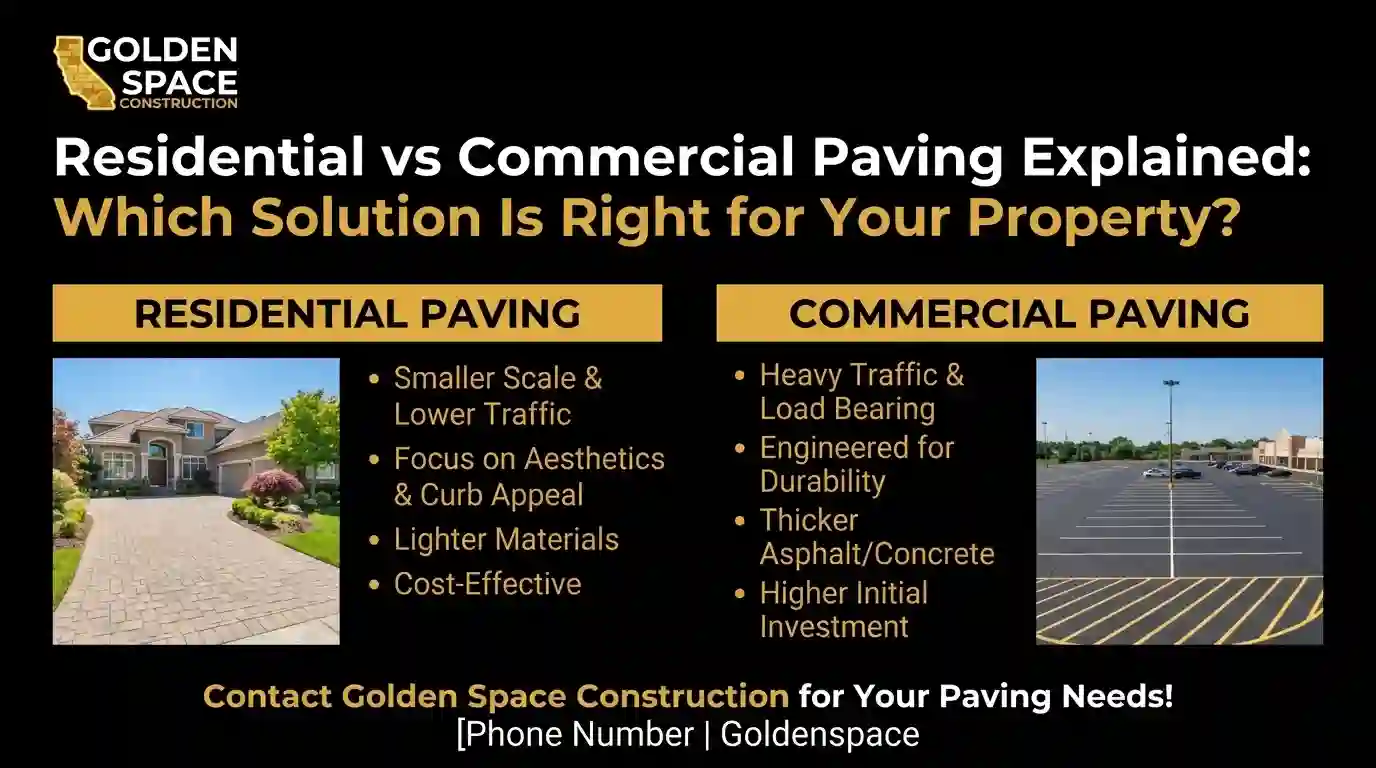
Yet homes and businesses have very different needs. A family driveway prioritizes beauty and curb appeal, while a busy retail lot demands heavy-duty durability and ADA compliance. Choosing the wrong approach wastes money and invites early repairs.
That’s exactly why hiring an experienced paving contractor matters so much. The right partner brings transparent bidding, a proven track record, and the specialized expertise your project deserves.
In this guide, you’ll learn what a paving contractor actually does, how residential and commercial paving differ, which materials work best for each, and how to choose a team you can trust. Let’s dig in!
What Does a Paving Contractor Do?
A great paving contractor handles far more than pouring concrete or laying asphalt. The work starts long before any material touches the ground, and continues long after the surface cures.
Here’s what a full-service contractor manages from start to finish:
- Site evaluation. First, they assess your soil, slope, and existing conditions to plan the right approach.
- Design planning. Next, they map out layout, materials, and drainage to match your goals and budget.
- Excavation. Old surfaces and debris get removed to create a clean foundation.
- Grading. Precise grading sets the slope that directs water away from buildings.
- Base preparation. A compacted sub-base and aggregate layer form the hidden backbone of durable pavement.
- Drainage. Proper drainage systems protect your investment from water damage and pooling.
- Material selection. They recommend the best surface for your traffic load, climate, and design.
- Installation. Skilled crews install the surface with attention to thickness, finish, and detail.
- Repairs. Cracks, potholes, and worn areas get fixed before they spread.
- Maintenance. Ongoing care like sealcoating extends the life of your pavement.
So what? When one experienced team owns the entire process, you get clear communication, consistent quality, and on-time completion. That’s the difference between a surface that lasts decades and one that fails in a few seasons. Explore the full range of concrete work and paving services to see how it all fits together.
What Is Residential Paving?
Residential paving focuses on the surfaces around your home. These projects blend function with beauty, because your driveway and walkways shape the very first impression of your property.
A skilled residential paving contractor typically handles:
- Driveways that handle daily parking and boost curb appeal
- Walkways that guide guests safely to your door
- Patios built for relaxing and entertaining
- Pool decks with slip-resistant, cool surfaces
- Front entrances that make a welcoming statement
- Decorative paving with patterns, colors, and texture
- Outdoor living areas that extend your usable space
For homeowners, the goals are clear. You want beauty that matches your home’s style, a real boost to your property value, everyday functionality, and durability that holds up to California’s sun and seasonal rain.
For example, a family in Lafayette might upgrade a cracked slab to elegant interlocking pavers. The result not only looks stunning but also raises resale appeal. Browse our paver installation services and patio designs for inspiration, or pair the work with a full outdoor improvement plan.
What Is Commercial Paving?
Commercial paving serves businesses, organizations, and multi-unit properties. These projects prioritize performance and safety over decorative flourishes, because they handle far heavier use.
A commercial paving contractor commonly works on:
- Parking lots for retail centers and offices
- Office buildings and corporate campuses
- Retail centers with constant customer traffic
- Apartment complexes serving many residents
- Industrial facilities with heavy equipment
- Schools that demand safe, durable surfaces
- Medical facilities requiring smooth, accessible access
The priorities shift dramatically here. Commercial properties must withstand heavy traffic load, meet ADA compliance and local building codes, ensure safety for the public, manage large-scale drainage, deliver long-term durability, and keep maintenance minimal to avoid disruption.
Picture a busy retail plaza in Oakland. The parking lot endures delivery trucks, loading zones, and hundreds of cars daily. Without proper base preparation and drainage, that surface cracks fast, and repairs interrupt business. So what? For commercial clients, a contractor’s proven track record and timeline adherence directly protect revenue.
Residential vs Commercial Paving: Key Differences
Both project types share the same core process, but the scale, materials, and standards vary widely. The table below breaks down what sets them apart.
| Feature | Residential Paving | Commercial Paving |
|---|---|---|
| Traffic load | Light to moderate (cars, foot traffic) | Heavy (trucks, constant vehicles) |
| Material choices | Pavers, decorative concrete, stamped concrete | Asphalt, reinforced concrete, commercial pavers |
| Thickness | Thinner surface and base | Thicker, reinforced for heavy loads |
| Cost | Lower total project cost | Higher due to scale and materials |
| Maintenance | Periodic sealing and cleaning | Frequent sealcoating, line striping, repairs |
| Design | Aesthetic, customizable, decorative | Functional, safety- and code-focused |
| Installation process | Faster, smaller crews | Larger crews, phased project management |
| Lifespan | 25–50 years (material dependent) | 15–30 years under heavy use |
| Permits | Sometimes required | Almost always required |
| Drainage requirements | Standard residential grading | Engineered, large-scale drainage systems |
So what? Understanding these differences helps you set a realistic budget and timeline before you request a bid. It also helps you spot a contractor who truly understands your specific property type.
Best Materials for Residential Paving
Homeowners enjoy plenty of beautiful, durable options. Here’s how the top residential choices compare.
Concrete
Poured concrete delivers a clean, classic look at a reasonable price. It handles daily traffic well, needs only occasional sealing, and lasts 25 to 40 years. It’s a budget-friendly favorite for most driveways and walkways.
Interlocking Pavers
Interlocking pavers flex with soil movement instead of cracking, and you can replace a single damaged unit easily. With a 30 to 50 year lifespan and endless design options, they’re ideal for luxury driveways and high-end curb appeal.
Stamped Concrete
Stamped concrete mimics stone or brick at a fraction of the cost. It offers stunning patterns and strong durability, though it needs resealing every two to three years to protect the finish.
Decorative Concrete
Polished, colored, and exposed aggregate finishes add real personality. Decorative concrete pairs excellent durability with a modern, custom look, perfect for homeowners who want something unique.
Natural Stone
Travertine, granite, and flagstone bring unmatched elegance and a 50-year-plus lifespan. Natural stone commands a premium price and needs periodic sealing, but it delivers serious property value. Browse our project gallery to see these materials in real California homes, or explore concrete driveway options.
Best Materials for Commercial Paving
Commercial surfaces demand materials engineered for heavy, constant use. Here’s what works best.
Asphalt
Asphalt paving is the commercial workhorse. It installs quickly, costs less upfront, and flexes under heavy traffic load. Regular sealcoating keeps parking lots smooth and extends their life, which makes asphalt a go-to for large lots.
Reinforced Concrete
Reinforced concrete uses steel mesh or rebar to handle serious weight. It resists cracking under delivery trucks and lasts decades, making it ideal for loading zones and high-traffic entrances.
Heavy-Duty Concrete
For industrial sites, heavy-duty concrete with a thicker slab and stronger mix stands up to extreme loads. It’s the right call where forklifts and machinery operate daily.
Permeable Pavement
Permeable pavement filters rainwater into the ground, reducing runoff and helping properties meet stormwater regulations. It’s a smart, sustainable choice for parking lots and eco-conscious developments.
Commercial Pavers
Heavy-duty commercial pavers combine durability with a polished, professional look. They handle high traffic, allow easy section repairs, and elevate the appearance of commercial entrances and plazas.
So what? Matching the material to the traffic load and use case keeps repair costs low and avoids disruptive shutdowns down the road.
How to Choose the Right Paving Contractor
Not every paving company delivers the same quality. Before you sign a contract, vet your candidates against these nine factors.
- Experience. Look for a contractor with years of work and a proven track record on projects like yours.
- Licensing. Confirm they hold a valid California contractor’s license.
- Insurance. Verify liability and workers’ compensation coverage to protect yourself.
- Portfolio. Review past projects to judge quality and range, ideally for similar property types.
- Reviews. Read customer feedback and ask for references you can actually call.
- Materials used. Ask whether they use proven, climate-appropriate products instead of bargain materials.
- Warranty. A reputable team backs its workmanship in writing.
- Communication. Clear, consistent updates signal a contractor who values your time.
- Local expertise. A team that knows California soil, permits, and climate avoids costly surprises.
So what? A contractor who checks every box protects your budget, your timeline, and your peace of mind. Whether you’re in Concord, Danville, or Richmond, local knowledge truly pays off.
Why Professional Installation Matters
You might be tempted by the lowest bid or a DIY weekend. When it comes to paving, though, expert installation makes all the difference between a surface that lasts and one that fails early.
Here’s what skilled professionals get right:
- Proper grading. They set the exact slope to direct water away from your buildings.
- Drainage. Engineered drainage protects your foundation and prevents pooling.
- Base preparation. A compacted sub-base and aggregate layer stop cracking and sinking.
- Load distribution. Correct thickness and reinforcement spread weight evenly across the surface.
- Long-term performance. Done right, your pavement delivers decades of dependable service.
- Reduced repairs. Quality work today means far fewer costly fixes tomorrow.
- Manufacturer warranties. Certified installation often unlocks stronger product warranties.
For example, a retaining wall paired with smart grading can fully solve drainage on a sloped commercial lot. That kind of integrated thinking only comes from experienced paving experts.
Common Paving Mistakes to Avoid
A little knowledge saves a lot of money! Steer clear of these frequent missteps.
- Choosing the cheapest quote. A bargain bid often skips proper base prep, leading to early failure. The redo costs more than doing it right once.
- Poor drainage. Water is pavement’s biggest enemy. Skip drainage planning, and even premium materials crack fast.
- Wrong material. Using residential-grade concrete on a commercial lot invites quick deterioration under heavy traffic load.
- DIY installation. Paving requires industrial equipment and precise grading that DIY rarely achieves.
- Skipping maintenance. Even durable surfaces need sealing and crack repair to reach their full lifespan.
- Hiring unlicensed contractors. Unlicensed crews leave you exposed to liability and shoddy workmanship.
So what? Avoiding these traps keeps your project on budget and your surface intact for years.
Maintenance Tips for Long-Lasting Pavement
Once you’ve invested in quality paving, smart upkeep protects it for decades. These simple habits go a long way!
- Cleaning. Sweep debris regularly and rinse away dirt. Tackle oil spills quickly before they stain.
- Sealing. Sealcoat asphalt and seal concrete on schedule to guard against water and UV damage.
- Crack repair. Fix small cracks early before they spread into bigger, pricier problems.
- Weed prevention. On pavers, refill joint sand to block weeds and keep units locked tight.
- Drainage inspections. Check that water still flows away from buildings and clear any blockages.
- Heavy load management. Where possible, limit oversized loads on residential surfaces to reduce stress.
- Annual inspections. Walk your property a few times a year to catch issues early.
A little attention protects your investment, your curb appeal, and your wallet. For larger properties, scheduling routine paving repair visits prevents small problems from disrupting operations.
Why Golden Space Hardscape Is Your Trusted Paving Contractor
When you’re vetting a California paving contractor, you want a partner with the expertise to deliver on time and on budget. That’s exactly what we bring to every project.
- Residential and commercial expertise. From elegant driveways to durable parking lots, our team handles both with specialized skill.
- Skilled installation crew. Our experienced installers focus on proper grading, drainage, and base preparation for lasting results.
- High-quality materials. We use proven, climate-appropriate products suited to California conditions, never bargain substitutes.
- Custom paving solutions. Every property is unique, so we tailor materials and design to your specific needs.
- Reliable project timelines. We commit to clear schedules and on-time completion, because your time matters.
- Customer-focused service. Transparent bidding and consistent communication keep you informed at every step.
- Local California experience. We know the soil, permits, and climate across communities like Oakland, Orinda, and Lafayette.
As a full-service hardscape contractor, we also handle outdoor kitchens and complete outdoor transformations, so your whole property comes together beautifully.
Frequently Asked Questions
What does a paving contractor do?
A paving contractor manages the entire process of building durable surfaces, from site evaluation and grading to base preparation, drainage, installation, repairs, and maintenance. A full-service team handles both residential and commercial projects with the right materials and equipment.
What is the difference between residential and commercial paving?
Residential paving focuses on beauty, curb appeal, and home value for driveways, patios, and walkways. Commercial paving prioritizes heavy traffic load capacity, ADA compliance, safety, and large-scale drainage for parking lots and business properties. Commercial projects also use thicker, reinforced materials.
Is concrete better than asphalt?
Both have strengths. Concrete lasts longer, offers more design options, and resists heat well, making it popular for residential driveways. Asphalt costs less upfront, installs faster, and flexes under heavy use, which makes it a favorite for commercial parking lots. The best choice depends on your traffic, budget, and goals.
How long does paving last?
With proper installation and care, concrete lasts 25 to 40 years, pavers last 30 to 50 years, and asphalt lasts 15 to 25 years. Commercial surfaces under heavy use often fall on the shorter end of these ranges.
How much does paving cost?
Costs vary by material, project size, and site conditions. Residential projects generally cost less than large commercial jobs. A detailed, transparent estimate from your paving contractor gives you the clearest picture for accurate budgeting.
What is the best paving material for driveways?
Interlocking pavers and quality concrete are top choices for residential driveways. Pavers offer flexibility and easy repairs, while concrete delivers a clean, durable, budget-friendly surface.
Do commercial paving projects require permits?
Almost always, yes. Commercial work usually involves permits for drainage, grading, and ADA compliance. An experienced contractor handles permit requirements for you, preventing delays and code issues.
How often should pavement be maintained?
Sealcoat asphalt every two to three years and seal concrete on a similar schedule. Inspect your surface annually, repair cracks promptly, and keep drainage clear to maximize lifespan.
Can damaged pavement be repaired instead of replaced?
Often, yes. Minor cracks, potholes, and surface wear can be repaired when the base is still solid. However, widespread damage or base failure usually calls for replacement to deliver lasting results.
How do I choose the best paving contractor?
Look for proven experience, valid licensing and insurance, a strong portfolio, positive reviews, quality materials, a clear warranty, and transparent communication. Local California expertise is a major plus for navigating soil, climate, and permits.
Ready to Pave Your Property the Right Way?
So, which solution fits your property best? Whether you’re a homeowner dreaming of a stunning paver driveway or a property manager who needs a parking lot built to handle constant traffic, the formula stays the same: the right materials plus expert installation equal decades of dependable performance.
Remember the key differences. Residential paving rewards you with beauty, curb appeal, and stronger property value. Commercial paving demands durability, ADA compliance, and engineered drainage that protects your business. Either way, hiring an experienced, licensed paving contractor protects your budget, your timeline, and your peace of mind.
Here’s the best part, you don’t have to navigate it alone! The team at Golden Space Hardscape brings residential and commercial expertise, high-quality materials, transparent bidding, and a genuine commitment to getting your project done right the first time.
Ready to get started? Contact Golden Space Hardscape today for a free consultation and estimate, and let’s build a surface that lasts for decades!